Welcome back to the Thelander Digest. This month, we are digging into one of the most important elements for a startup: the option pool. Whether you’re setting one up for the first time, preparing for your next round of fundraising or rethinking your equity strategy as you scale, getting the option pool right has the long-term implications for founders, employees, investors and non-investor board members.An option pool consists of shares reserved for executives and employees of a private company. It’s the equity budget you’ll use to attract, retain, incentivize and align the team. One of the most frequent questions we receive is: how big should our option pool be?
First, let’s break down the option pool elements:
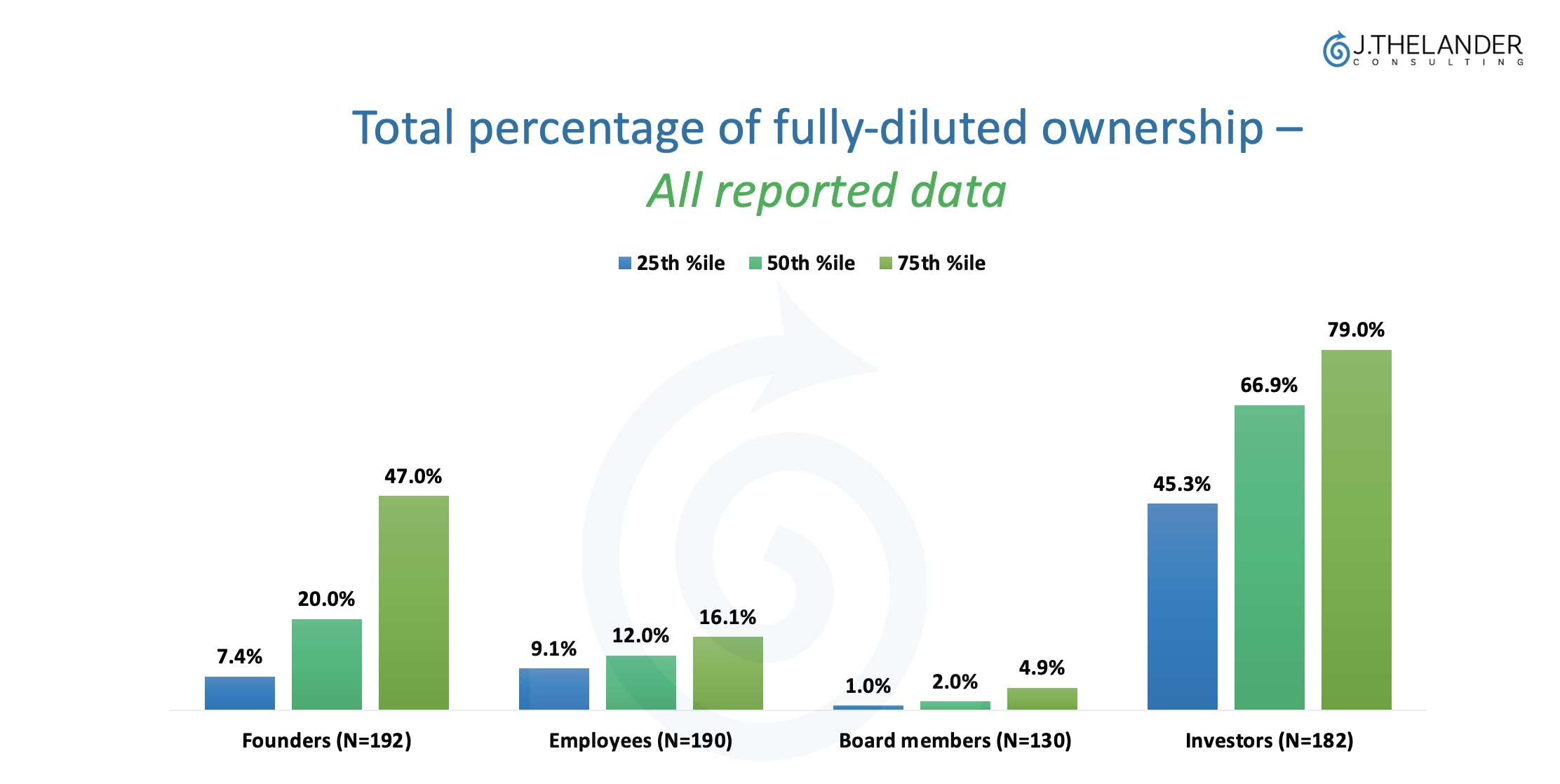
The option pool serves several stakeholders, each with different needs:  Founders: Pool size and timing directly affect their ownership as they raise capital. Thelander data shows median fully diluted founder ownership sits at 20%, with significant spread – from 7.4% at the 25th percentile to 47% at the 75th — reflecting how dramatically the total amount of financing shapes the outcome. Employees: Grants come out of the this pool and existing grants get diluted as new capital comes in. Across our dataset, the median employee ownership is 12% of fully diluted shares, ranging from 9.1% to 16.1% across the 25th to 75th percentile. Board Members: Board member equity is typically modest — median ownership is 2% of fully diluted shares — but it remains an important tool for attracting experienced advisors. Investors: At the median, investors hold 66.9% of fully diluted ownership, ranging from 45.3% to 79.0%. They want enough equity available in the pool to recruit talent, but not so much that it over-dilutes their own position.
Now the important question, how big should your option pool be?
For most private companies, the employee option pool falls between 10% and 15% of fully diluted shares. The precise number depends on how much capital you’ve raised to date and the specifics of your team. As a company raises more capital, founder and employee ownership naturally dilutes – which means the pool must be sized thoughtfully at each stage to remain competitive for talent.
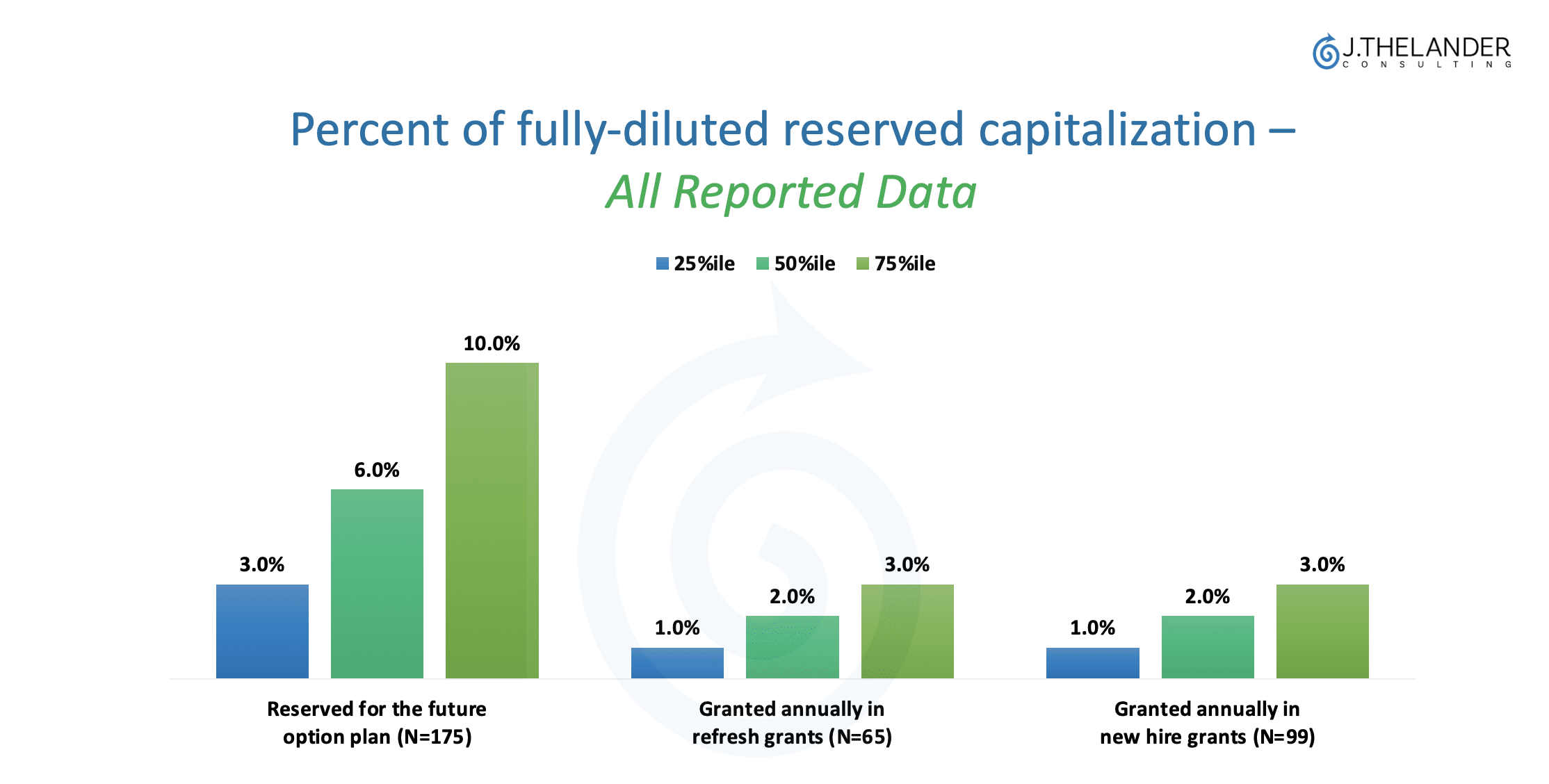
Thelander data on reserved capitalization tells a more nuanced story. The median company reserves 6% of fully diluted shares for the future option pool plan, with a range from 3% at the 25th percentile to 10% at the 75th percentile. Annual grant activity adds another layer: the median company grants 2% in new hire grants and 2% in refresh grants each year, with top-quartile companies granting up to 3% in each category.
If you’re a Thelander subscriber, the full breakdown by stage, industry, and financing level are available in the year-end report on the platform.
Looking forward: Planning for dilution
Every time you raise capital, existing equity gets diluted. This is expected, but it requires proactive planning to make sure the pool is large enough to cover the hires you need to make and the employees you want to re-fresh. A well designed option pool prepares you for your company’s next stage of growth, while keeping founder, employee and investor ownership aligned with the value they’re creating along the way.
You can download the full year-end participant report on the Thelander platform (that includes detailed option pool benchmarks) by completing the Thelander Year-End Merit Increase, Option Pool & Bonus Survey today.