
According to the Q2 PitchBook-NVCA Venture Monitor, “LP dollars are still flowing, but they are reaching a smaller set of large established managers rather than the broader market.” On the other hand, venture dollars continued to flow “unevenly” and megadeals made up 87.5% of the $412.7 billion deployed.
So, how does this translate to talent and compensation?
In this month’s digest, we looked at how partner and key-recruit turnover changed YoY, and for firms who have lost a key recruit, where that person landed.
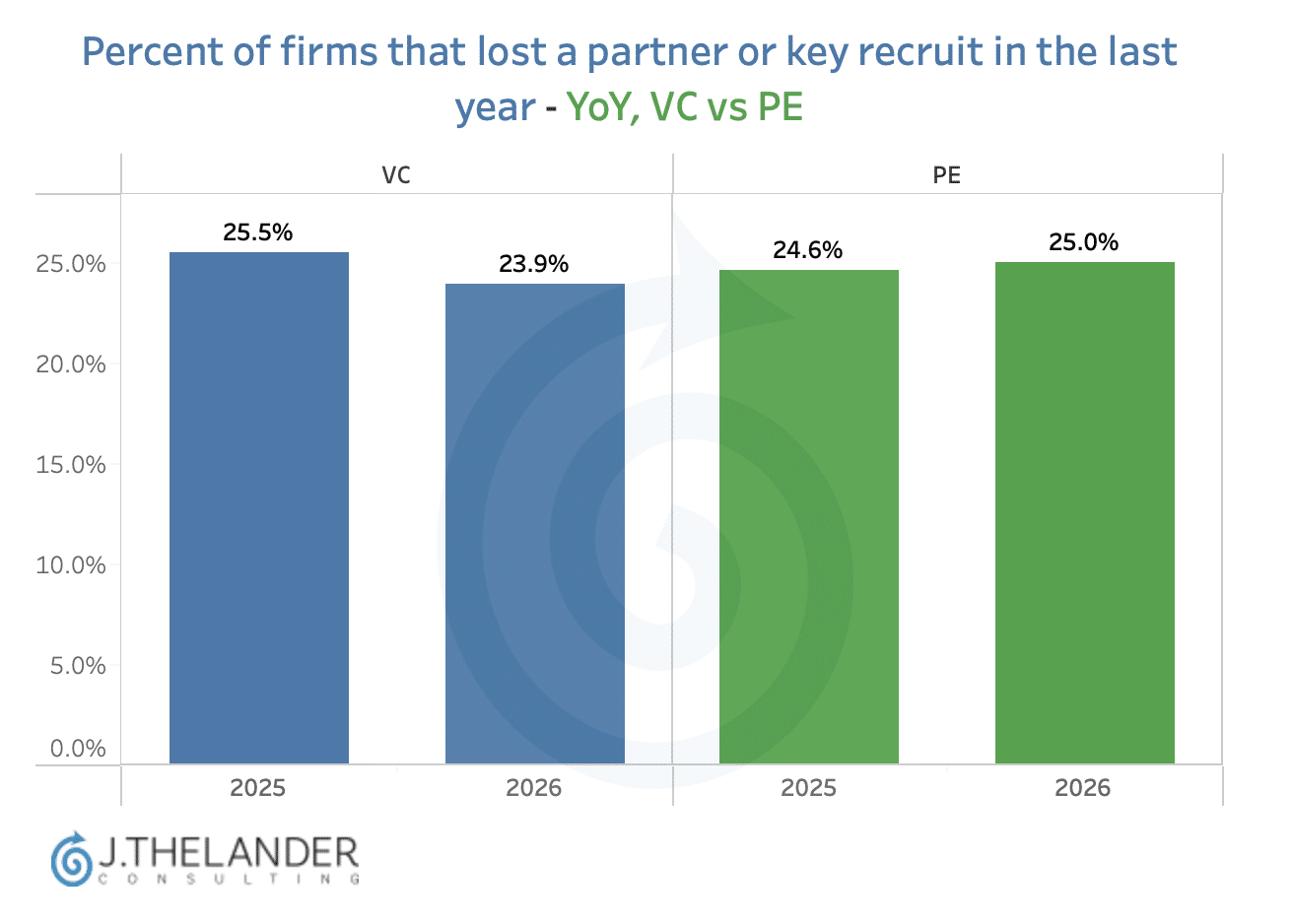
- The share of VC firms that lost a partner or key recruit in the last year eased slightly, from 25.5% to 23.9%
- PE moved the other way, ticking up from 24.6% to 25.0%
- Even with things easing up a bit on the VC Side, this shows that competition for top talent is still going strong among both VC and PE firms
- Where is VC talent moving?
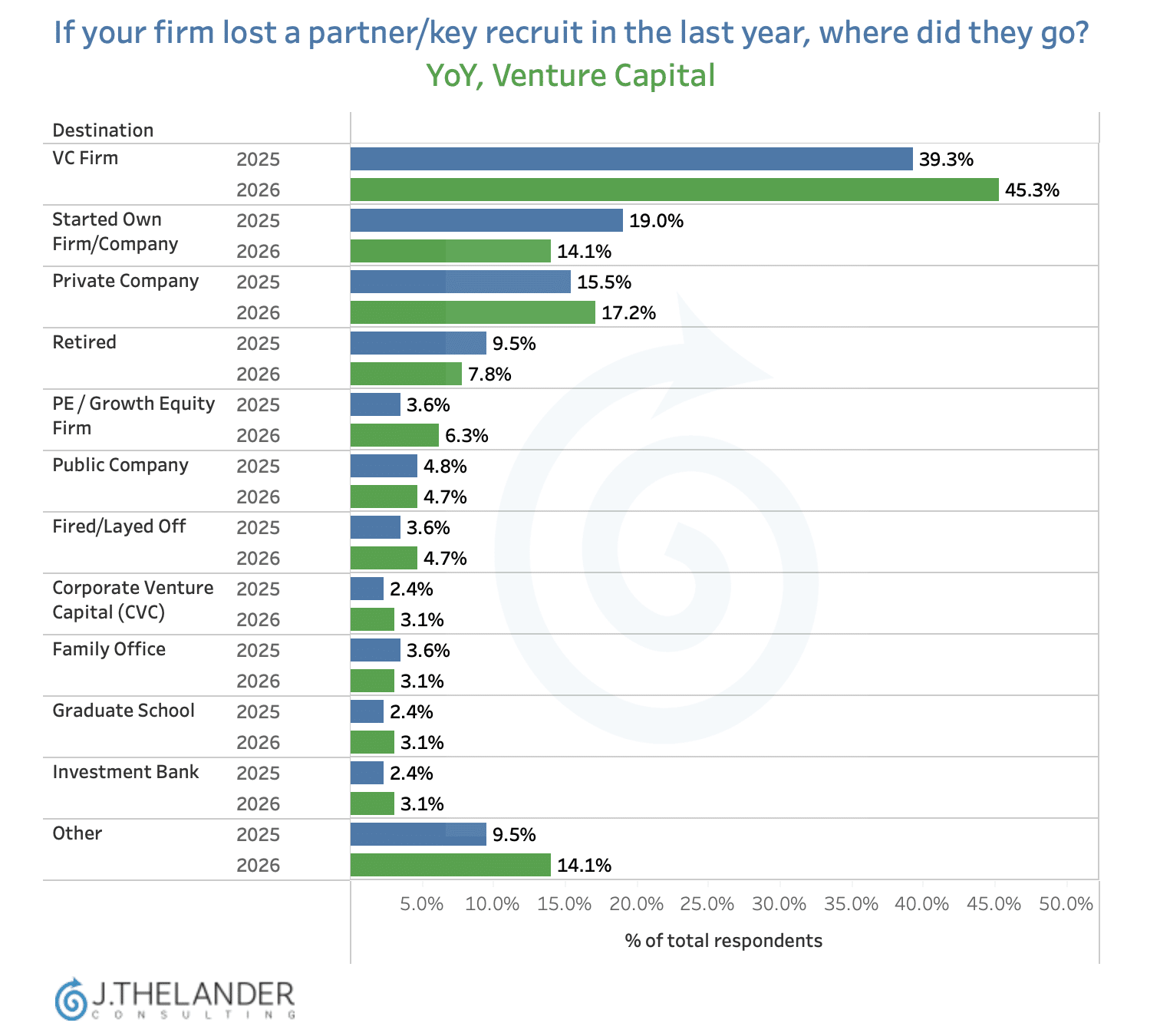
Among VC firms that lost someone, the most common destination, another VC firm, climbed from 39.3% to 45.3%, now accounting for nearly half of all moves. This suggests that as investor dollars have flowed into VC funds, and done so unevenly, it has increased the competition for top talent among firms.
Another big shift is below the top line: private companies (17.2%) have overtaken starting one’s own firm/company (14.1%) as the second most common destination this year. This is more about the drop in percentage of respondents reporting losing employees or key recruits to them starting their own firms than the increase in those losing them to private companies, which suggests that the key factor here is the difficult funding environment for newer and less established firms.
At the same time, the increased demand for talented and experienced people in the concentrated sector of private companies on the receiving end of the AI investment wave and recent spurt of megadeals also plays its part. As does the increasing ease with which companies are able to build and scale businesses in the era of AI, has produced a wave of entrepreneurism that may be drawing venture talent to join the startup world as operators rather than launching their own firm.
What about Private Equity?
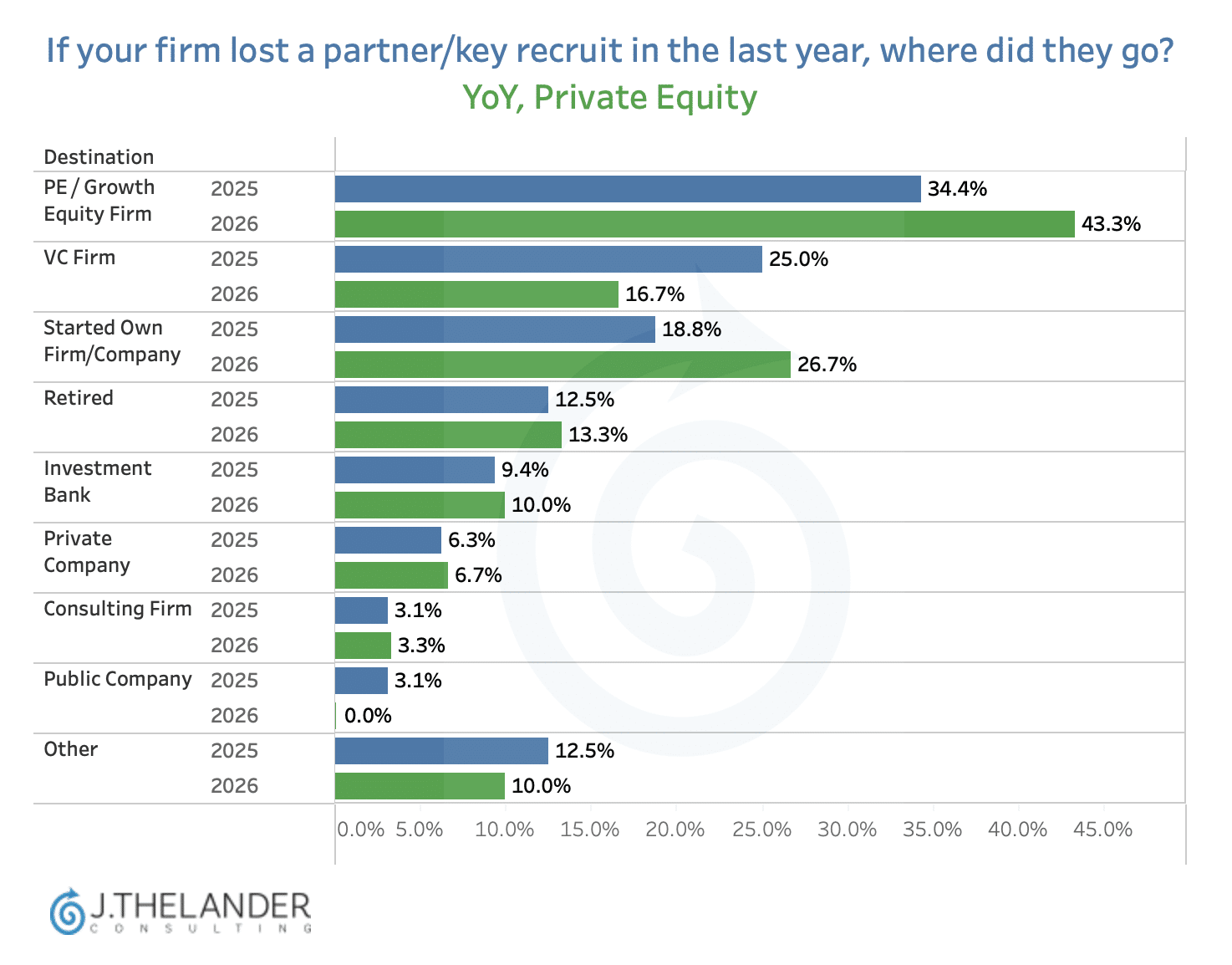
Similar to what we saw with VC, departing PE talent is increasingly landing at another PE or growth equity firm, up nearly 9 points to 43.3%.
But the entrepreneurial appetite is rising too: starting one’s own firm/company (26.7%) has replaced VC firm as the second most common destination. It may also reflect the same uncertain VC funding environment we discussed above in relation to the decrease in VC employees going out on their own, which could make moving from private equity to venture capital a riskier proposition.
Investment bank and private company both ticked up as well, while public company fell to 0%. Which further solidifies the notion that it is more enticing to be a private company unicorn than a public company.
What’s the bottom line? In 2026, departing talent across venture and private equity is most likely to stay within its own lane, venture to venture, PE to PE, which keeps the pressure on peer-to-peer retention rather than cross-industry poaching. But, it’s not in a vacuum.
With the first half of the year behind us, have you started thinking about your 2027 compensation programs, either for your firm and/or portfolio companies?
Now is the ideal time to get ahead of your compensation planning – and the best place to start is by getting a gut check on where your compensation actually stands against the market. Participate in the no-cost compensation survey for real-time cash and carry benchmarks and get ahead before bonus season hits.