
Private Company Salary Structures

Custom Salary Structures

Thelander Pay Plans are designed to add the right amount of formality and structure to your private company. A balance must be struck between hiring and building the organization while avoiding salary and equity bands unsuited for a younger company.

That is where our salary and equity ranges for director level and below positions make sense. Even in roles with “manager” titles, compensation is comparable for individual contributors and those who manage other people.

Schedule a Demo to Learn More >

Do You Need a Real Compensation Strategy, or Can You Wing It?  


Compensation isn’t a guessing game — but for many startups, it’s a challenging task to put their house in order. Early compensation decisions are often reactive: hiring quickly and negotiating offers on a case-by-case basis. Over time, the mistakes compound — inconsistent pay, difficulty closing candidates, retention risk, scrutiny from investors and boards — which will impact the company’s future success and fundraising.
Investors and boards expect a clear compensation framework — one that aligns cash and equity with company stage and accounts for the option pool with an eye towards the future: equity needed for new hires, refresh awards, and future option plan reserved.

That requires more than ad hoc decisions. It requires structure.

Get Started Today>

The 3 Problems Salary Structures (Pay Plans) Solve

#1: Infrastructure.

Private companies AKA startups with fewer than 200 people do not have a compensation structure and they’re making one-off decisions without a framework to rely on. These decisions compound over time and become expensive to fix — losing key talent along the way.


#2. Talent.

Without data to back them up, companies can’t answer employees who come to them with the “I think I’m underpaid” conversation. Attracting and retaining talent gets choppy when there are no answers or a structure to point to.


#3. Pay Transparency.

As Pay Transparency laws expand, companies without documented and formal levels and ranges have no defensible basis for what someone earns today — and how it progresses as they advance from entry-level to director.


The sooner a private company puts this infrastructure in place, the better. It frees leadership to focus on building the business — not playing defense on compensation.

Frequently Asked Questions (FAQs)

What is a Pay Plan?

A Pay Plan is a private company salary structure — a defined framework of job levels, titles, and cash and equity ranges by function. It gives companies a consistent, defensible basis for every compensation decision, from a first hire to a director-level offer.


Who are Pay Plans designed for?

Private life science and tech companies, typically with fewer than 200 employees, that are making compensation decisions without a formal structure in place.


At what stage should a company build a Pay Plan?

It’s never too early. The sooner the infrastructure is in place, the less time leadership spends playing defense — and the stronger the foundation for every hire that follows.


How does a Pay Plan (Salary Structure) change as a company grows?

As a company raises capital or revenue grows, cash and equity ranges shift — sometimes significantly. Thelander Pay Plans are grounded in market data that reflects those shifts by financing stage, so companies can plan ahead rather than react.


What if we don’t have anyone internally to build this?

That’s exactly the kind of work Thelander builds for clients.

Request a Demo Today >

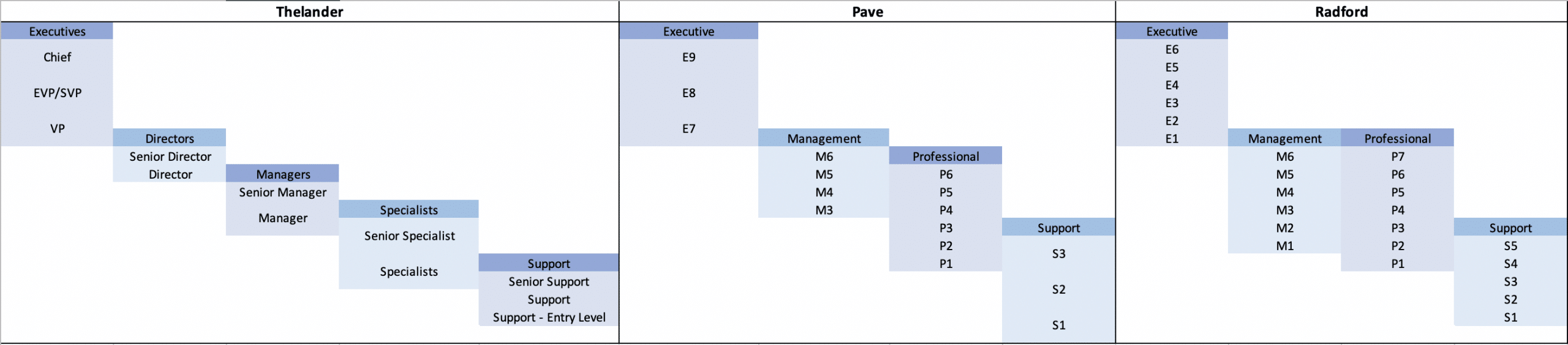
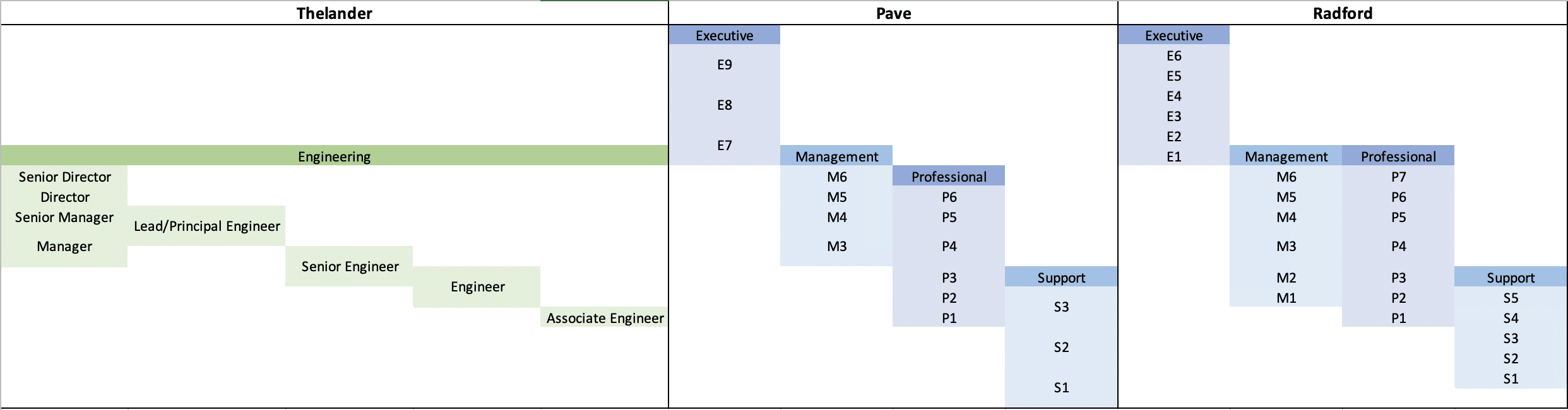
How Thelander Job Leveling Compares to Pave & Radford

Administrative, Scientific & Technical

Engineering

Get Started Today

Thelander can help you put your compensation infrastructure in place with Pay Plans.

Request a Demo >