Newsletter – PC Edition

The Thelander Digest – Private Company Edition

Private Company 2027 Salary Increases 2027: How to Plan

Whether you’re a founder or CEO thinking on behalf of the company or an individual wondering about your own compensation, by this time of the year, salary increases have probably crossed your mind. And for good reason. There’s a lot of movement in the private capital market. The way companies are hiring is very different from what it was in 2021 and 2022 (the lemon years) and executives are thinking about who is essential to the business and how to incentivize them to stay. And, let’s be honest, when someone is paid competitively and happy with their comp, they stop thinking
Read More »

How does executive equity change from Seed → Series A → Series B?

While we like to stay away from the word *should*, the real question is – how does executive equity change as a company raises capital? This week, we’re continuing our deep dive to answer your frequently asked compensation questions. Using the comp planning tool from the Thelander Platform, (a hybrid of our dataset and consulting resources, now off the shelf), we’re looking at how equity changes for a CEO as they raise capital. So, how does it change? What does this mean for you and your team? How do you plan ahead? If you’re a CEO raising capital here are

Read More »

Private Company (Startup) Compensation: Equity 101

Equity 101 for Private Companies: How to Structure Startup Compensation from Day One Adapted from a Thelander “Comp Talks” lunch-and-learn with Jodie Thelander (J. Thelander Consulting) and Ally Marada, Partner in the Compensation & Benefits practice at Cooley. Getting equity compensation right is one of the highest-leverage decisions a private company makes — and one of the easiest to get wrong. In a recent 30-minute session, compensation intelligence firm Thelander sat down with Cooley partner Ally Marada to walk through the fundamentals: how to benchmark pay, which equity awards to use at each stage, and why simplicity beats sophistication in

Read More »

How Big Your Employee Option Pool Should Be at a Startup

This month, we are digging into one of the most important elements for a startup: the option pool. Whether you’re setting one up for the first time, preparing for your next round of fundraising or rethinking your equity strategy as you scale, getting the option pool right has the long-term implications for founders, employees, investors and non-investor board members. An option pool consists of shares reserved for executives and employees of a private company. It’s the equity budget you’ll use to attract, retain, incentivize and align the team. One of the most frequent questions we receive is: how big should
Read More »

How Much to Compensate Independent Board Members at Startups

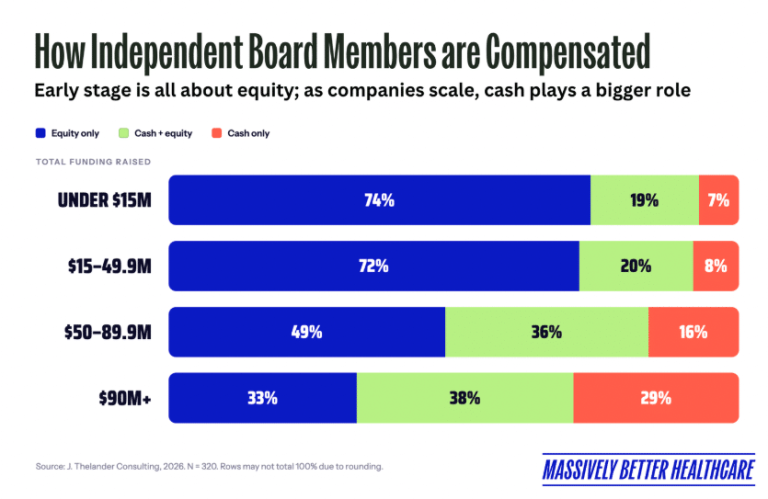
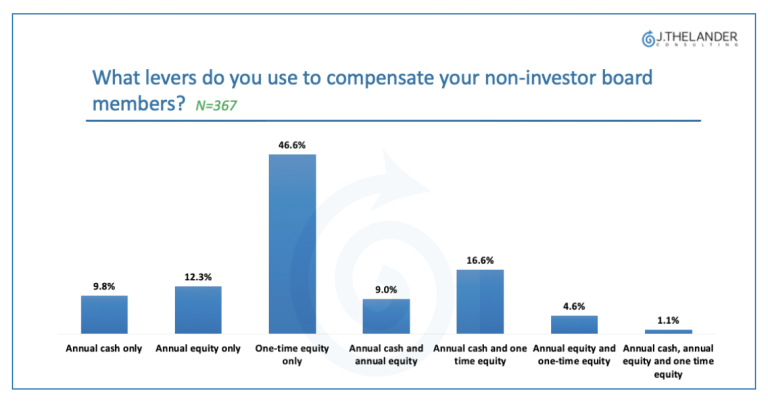
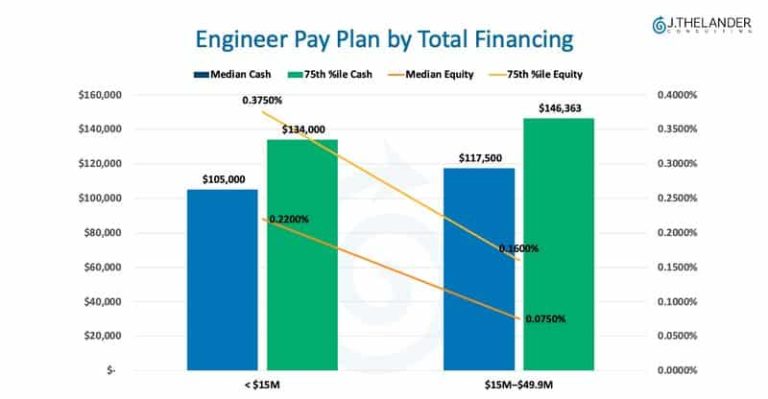
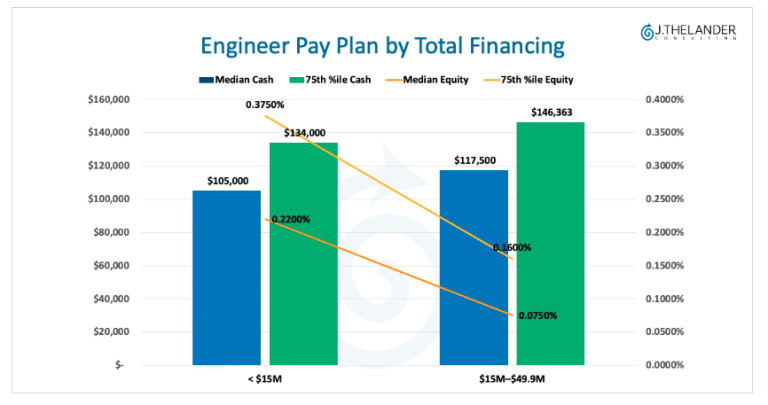
One of the questions we get asked on a weekly basis is 1. Does Thelander have comp data for non-investor / independent board members? and 2. How much do they make? Since we ran an exclusive analysis for Halle Tecco’s latest post on “What Independent Board Members Do (And How They’re Compensated”, we wanted to share the data with you. Let’s dig in. There are a couple of ways to compensate independent board members, and the actual mix of cash and/or equity depends on how much capital the company has raised. Under $15 million in total financing:  At this stage, cash retainers

Read More »

Startup Compensation Benchmarks: The 7 Hires You Need to Get Right

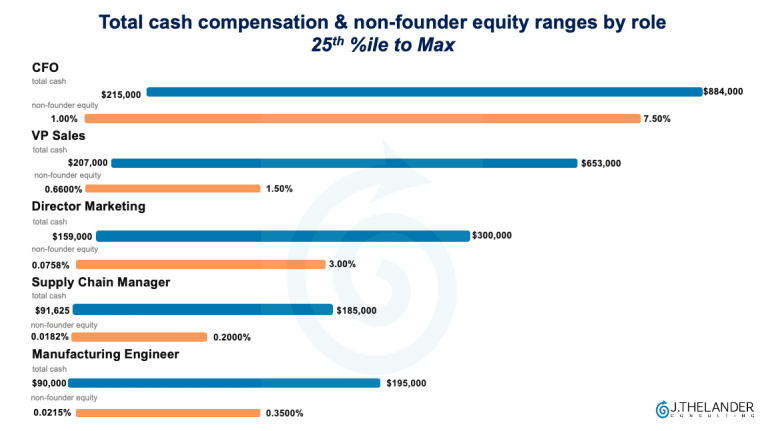
A few weeks ago, we read an a16z newsletter on the “7 hires a hardware startup needs to get right” that outlined the seven functions (besides engineering) that determines whether a “great product ever becomes a great business.” Which include: Manufacturing, Deployments, Supply Chain, Finance, Sales, Policy and Marketing. And while the piece described how to find the right person, and how to know when you’ve found the right person, they didn’t touch on what it takes to compensate those roles. That’s where we come in. While we’re looking at data for all types of private companies – including hardware and tech

Read More »

Biotech CEO Compensation: The Real Inflection Point

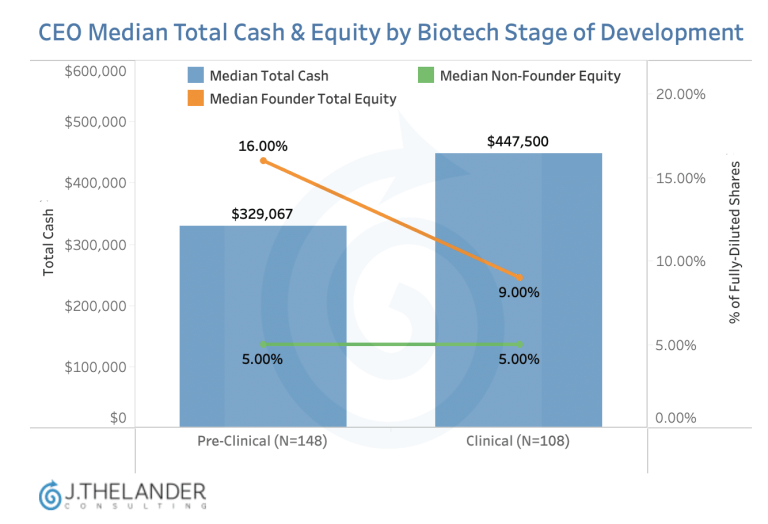
The real inflection point in biotech CEO compensation isn’t between early and late clinical trials. It’s the leap from pre-clinical to clinical. In this data drop, pulled directly from the Thelander Platform, we looked at how median total cash, founder and non-founder equity changes across biotech stages of development. Pre-Clinical → ClinicalMedian total cash: $329,067 → $447,500Median total founder equity: 16.00% → 9.00%Median non-founder equity: Steady at 5.00% Clinical Phase I → Phase II/IIIMedian total cash: $452,500 → $445,720Median total founder equity: 7.99% → 9.90%Median non-founder equity: 5.00% → 4.74% The takeaway? CEO total cash jumps significantly between the pre-clinical

Read More »

Marketing & Communications Roles at Investment Firms. How’s the Comp?

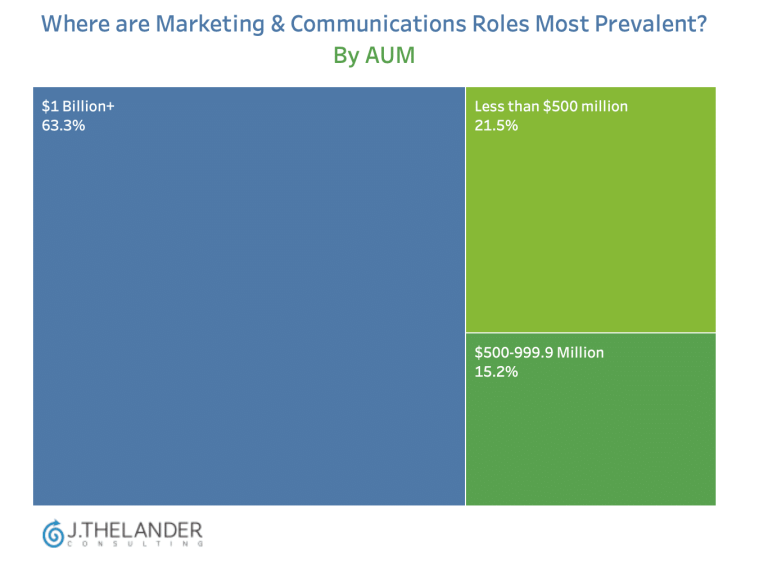
Dedicated in-house marketing teams at investment firms is still relatively rare, but that’s changing. Firms like Lightspeed are leading the shift, with their CMO describing the firm as “much more than capital providers. They’ve become media companies.” How common are dedicated Marketing & Communications roles across the broader investment firm ecosystem, and what does it take for a firm to build one in-house? We pulled data from the Thelander-PitchBook Investment Firm Compensation Survey to find out. It Starts with AUM The clearest predictor of whether a firm has a Marketing & Communications function is AUM. Overall, Marketing & Communications positions are most

Read More »

How Private Company Fundraising Has Changed in 5 Charts

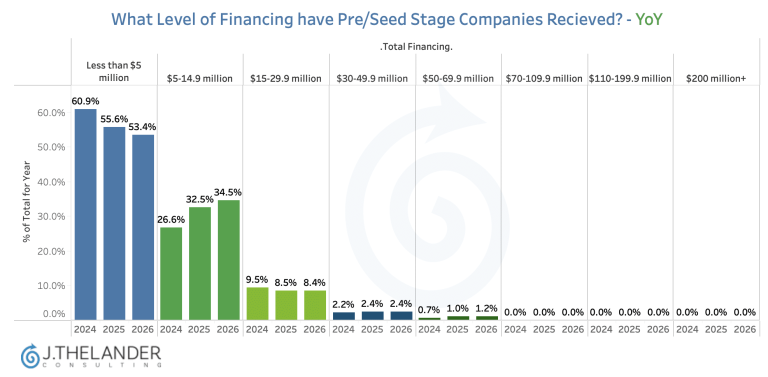
Fundraising rounds at private companies are getting larger at every stage. In this month’s digest, we are digging into the correlation between the most recent series raised and the total amount of financing raised (as a dollar amount) to see how the market has shifted since 2024. That shift has meaningful implications for how companies structure their compensation, specifically the mix of cash and equity (for founders and non-founders) at each level of financing. Let’s take a look. Pre-Seed / Seed: Companies Are Raising More From the Start  Seed stage companies are coming out of the fundraising gate with larger

Read More »

Operations Managers Pay is Up 31% – Here’s Why

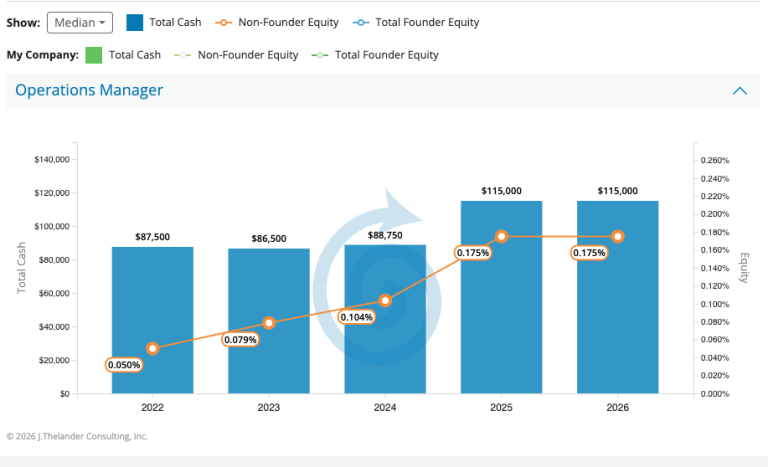
As venture rounds get bigger and the sub-$5M round disappears (PitchBook), it’s changed the way that companies recruit and retain talent – and the YoY compensation data is changing as a result. Take Operations Managers at companies that have raised less than $15 Million. Median total cash compensation has increased from $87,500 in 2022 to $115,000 in 2026 – a 31% increase. At the 75th percentile, total cash has grown from $120,000 to $140,554 over the same period. Non-founder equity has steadily trended up from 0.050% in 2022 to a peak of 0.175% in 2025 and holding there into 2026.

Read More »

Why Mixing Private & Public Compensation Data Doesn’t Cut It

One time is random. Twice is a pattern. I got off the phone with a biotech VC today who was genuinely trying to understand why Thelander doesn’t mix public and private company compensation data together for the private company dataset. This question has come up enough that we’re putting our answer on the record. 1. Public and private companies have fundamentally different compensation levers.Private companies have a unique compensation lever that isn’t available to public companies: equity. 2. Private company total cash and equity compensation varies by financing stage.How much capital a company has raised matters, especially when it comes

Read More »

Private company M&A activity is up. Is your company prepared? Find out in 2 charts.

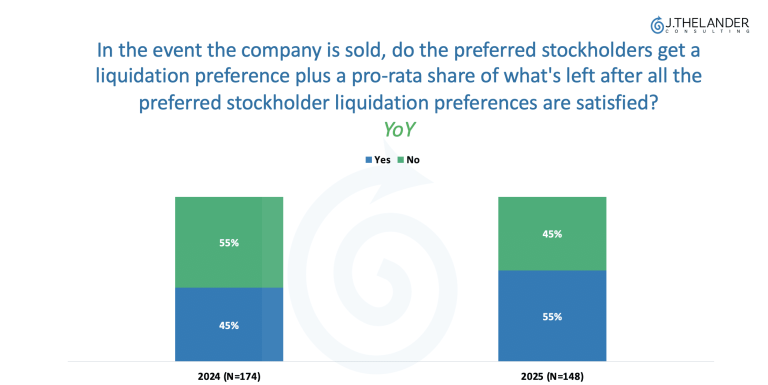
Global M&A hit a historic milestone in Q1 2026. According to PitchBook, “total deal value reaching an estimated $1.6 trillion—a new quarterly record—up 50.6% YoY despite a backdrop of trade policy uncertainty, geopolitical tension, and AI-driven disruption risk.” North America led the way, and “liquidity remains abundant with buyers and sellers finding terms.” With M&A activity at record levels, one of the most important things to have in place before a transaction are your liquidation preferences. Liquidation Preferences Whether preferred stockholders receive a liquidation preference plus a pro-rata share determines the portion of the proceeds remaining for founders and employees,

Read More »

Investment Firm Compensation: Why AUM Alone Isn’t Enough

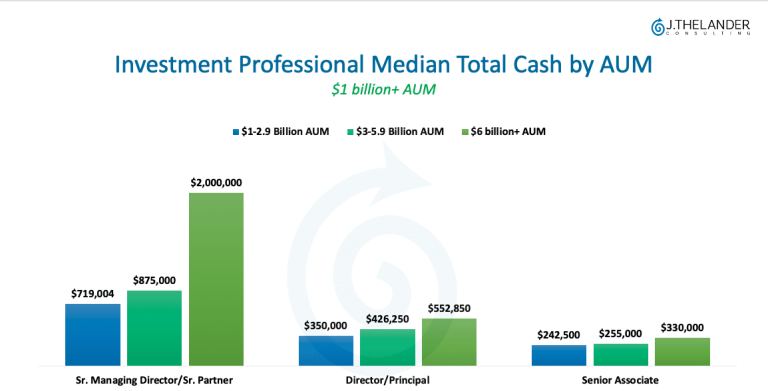
We just wrapped an investment firm consulting project where we looked at the firm’s compensation by both total AUM and size of most recent fund. We found the data to be interesting, so we’re sharing some of the analysis with you in this month’s digest. One of the most influential ways to customize investment firm compensation is by AUM, because it impacts the mix of cash and carry. At the same time, AUM on its own doesn’t necessarily tell you everything you need to know about compensation levels. The size of most recent fund can also matter in determining the compensation levels,

Read More »

The State of Compensation for US Private Biotech Companies

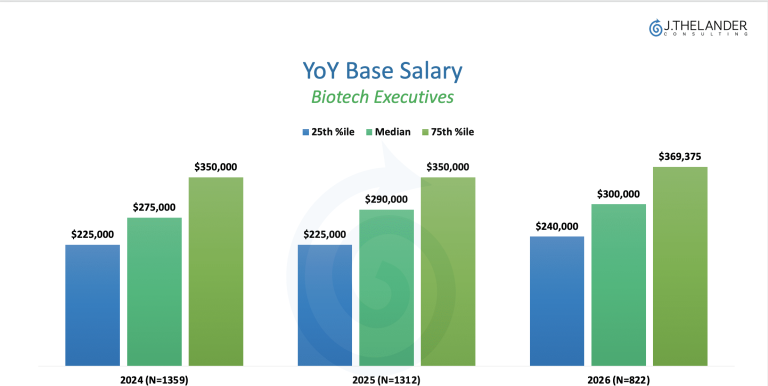
According to PitchBook, “Biopharma companies’ willingness to go public appears to be making a tentative reversal after a long drought…The real drive behind this resurgence, according to investors, is the M&A market.” We looked at our YoY biotech compensation data and used a preview of data from our upcoming US Private Biotech Compensation Report to see what the numbers say. Base Salary Biotech executive base salaries grew 9% at the median – from $275,000 in 2024 to $300,000 in 2026 – and 5.5% at the 75th percentile, from $350,000 to $369,375. Staff-level employees saw steady growth too – up 5.6% at

Read More »

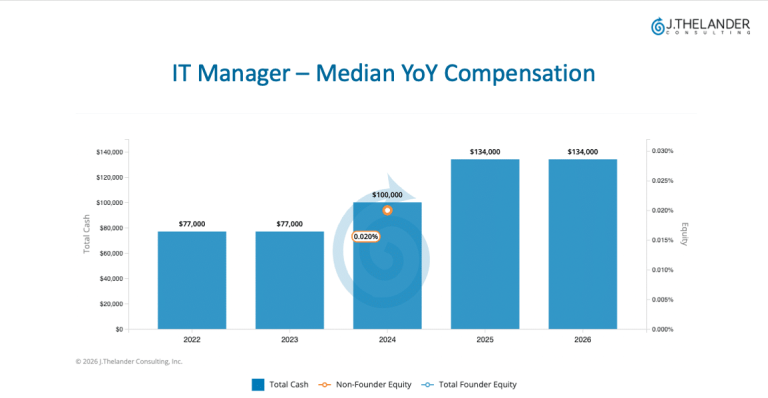
Startup Tech Compensation Trends: IT Manager Pay Has Nearly Doubled. Software Engineer Pay Hasn’t.

Last week, Katherine Bindley from The Wall Street Journal published an article on “The Tech Jobs That Are Safe From AI.” She reported that senior IT and computer science job postings are up YoY – while entry level postings are down – which motivated us to look whether the same was true for compensation at tech startups. Using the year-over-year compensation trend dataset on the Thelander Platform, we looked at tech startups who have raised less than $50 million. Here’s what the data told us: Median total cash for entry-level (associate) software engineers has stayed steady since 2022 – hovering

Read More »

Pay Transparency Is Exposing a Bigger Problem: Private Companies Can’t Explain Why They Pay What They Pay

In a Fortune article published this week on the pay gap and pay transparency, the takeaway wasn’t that companies aren’t sharing pay — it’s that they can’t explain it. Private companies with fewer than 200 employees need a salary structure with total cash and equity ranges. And sure, having a job architecture and salary structure makes you compliant with pay transparency laws — but more importantly, it gives you the reason why you’re paying Jane, a Level II Software Engineer, X dollars in total cash and Y percentage in fully diluted shares. The companies that can explain why they pay

Read More »

The Founder’s Guide to Talent, Capital & Compensation

A strong startup compensation strategy isn’t just a financing exercise — it’s how founders attract the leaders who turn science into value. In this webinar, J. Thelander Consulting founder and CEO Jody Thelander was joined by Chris Garabedian, Joanna & Ellen of JM Search, who co-lead the firm’s biopharma practice, to discuss how founders, boards, and investors structure equity and cash across every stage of growth. Key Takeaways Want to see how your company’s compensation compares to real-time market data? Participate in the no-cost Thelander Private Company Compensation Survey today — the more you give, the more you get.

Read More »

The AI Equity Premium: What the Data Shows Across Private Tech and Life Science Companies

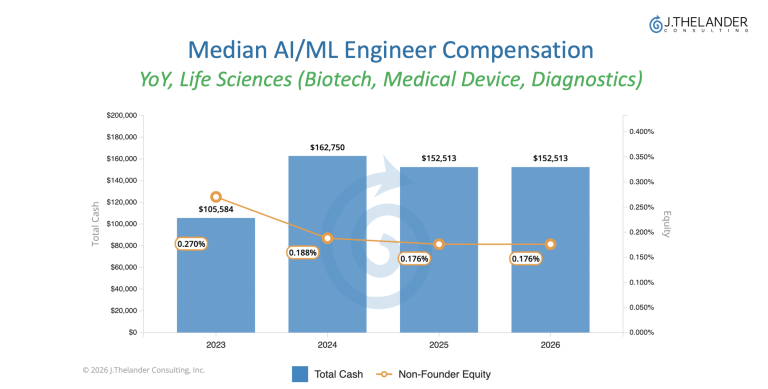
In Carta‘s State of Startup Compensation Report, they said that “the dominance of AI is shaping how founders build and compensate their teams.” AI equity compensation is rising — but is it rising equally across every industry? In Michael Bodley‘s article digging into the report, he noted that initial equity grants for individual contributors on Carta have grown by nearly 11% over the past two years, while median salaries rose 6.4%. That motivated us to look at our own life science and tech data to see if the AI equity premium was hitting every industry the same way. And it’s

Read More »

Private Company (Startup) Compensation: Equity 101

Startup equity compensation is one of the most powerful levers a private company has — and one of the easiest to get wrong if you don’t plan for it early. In this 30-minute Comp Talks session, J. Thelander Consulting founder and CEO Jody Thelander sat down with Alessandra Murata, a partner in the compensation and benefits practice at Cooley, to break down equity awards, vesting, dilution, and option pool strategy for private companies across life science and tech. Key Takeaways: Why It Matters for Compensation Planning The through-line of the session: dilution is predictable, so plan for it. Thelander’s Pay

Read More »

The Option Pool Paradox: Why Higher Valuations Don’t Always Pay Off

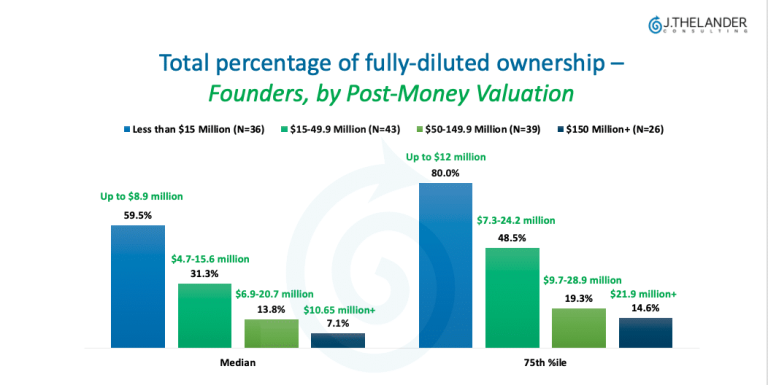
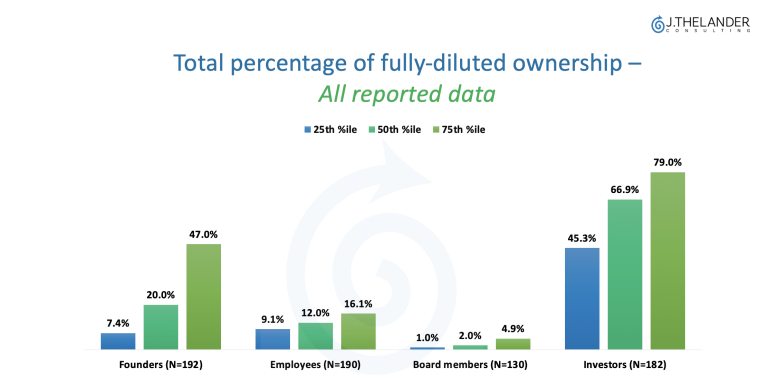
We’re taking last week’s analysis one step further: what do those different option pool sizes actually mean in dollar terms? The short answer is that a higher valuation doesn’t automatically translate into a better outcome for founders. A smaller slice of a bigger pie can — and sometimes does — mean less money in your pocket. Using the chart above from the Thelander Option Pool Report (available on the Thelander Platform), we looked at the median and 75th percentile of total percentage of fully-diluted ownership for founder across valuation tiers, then multiplied those percentages by the corresponding valuation ranges to

Read More »

Startup Option Pool by Valuation: How Pools Shift as Companies Grow

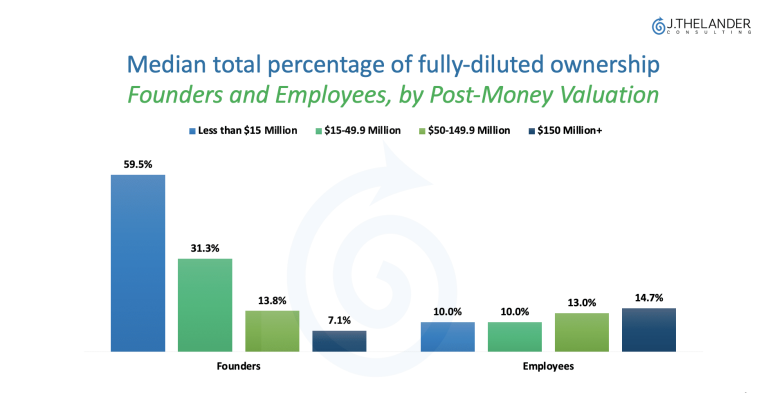
With the slew of new data that came out of the PitchBook-NVCA Venture Monitor r this week, startup option pool by valuation has been on our mind. So, we dug into the Thelander Option Pool Report (available on the Thelander Platform) to see how rising valuations changed the makeup of the option pool between founders, employees and investors (that data drop is coming tomorrow). Valuations are rising, especially for top-tier startups, but it’s important for companies at all levels to understand how valuation relates to compensation. Valuations primarily affect compensation by determining the value of the shares held by founders

Read More »

Private Company Non-Investor Board Member Compensation Data

Independent board members bring industry expertise and valuable networks to the table — and attracting the right ones means knowing what the market pays. So, how does private company non-investor board member compensation actually work? Is it a mix of cash and equity? According to Thelander, yes. And does it change as companies grow? Again, yes. Significantly. What the Data Is Actually Saying The overall picture:  The financing stage story is where it gets really interesting: The through line: As companies raise more capital, they shift from pure one-time equity toward cash and equity combinations. The board formalizes compensation in lock-step

Read More »

Startup Compensation Strategy: A 4-Step Roadmap From Ad Hoc Offers to Defined Bands

Every founder eventually asks the same question about their startup compensation strategy: “Do I need a real compensation strategy or can I wing it?” Here’s a 4-step roadmap for when and how to move from ad hoc offers to defined bands and levels. 1. What is a “real” compensation infrastructure? A compensation infrastructure means building clear job architecture and pay structures across your company. It includes defined levels for scientific, technical and administrative roles (from entry level to director), with cash and equity bands tied to market data. It also means moving away from ad hoc decisions based on what

Read More »

“How big should our option pool be?”

Welcome back to the Thelander Digest. This month, we are digging into one of the most important elements for a startup: the option pool. Whether you’re setting one up for the first time, preparing for your next round of fundraising or rethinking your equity strategy as you scale, getting the option pool right has the long-term implications for founders, employees, investors and non-investor board members.An option pool consists of shares reserved for executives and employees of a private company. It’s the equity budget you’ll use to attract, retain, incentivize and align the team. One of the most frequent questions we receive
Read More »

What’s the Difference Between Founder Shares and Founder Shares for Current Job at a Startup?

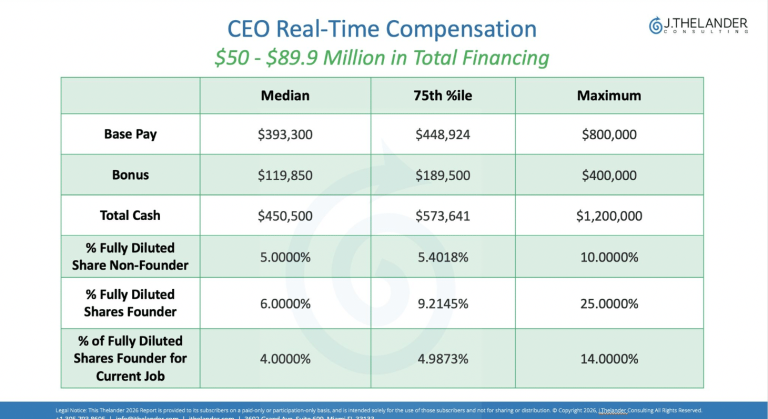
One of our most frequently asked questions is about founder shares — specifically, what’s the difference between founder shares and equity granted for current job?In this week’s PC Data Drop, we’re giving you the answer using a real-time CEO data table pulled directly from the Thelander platform — filtered for companies with $50M–$89.9M in total financing. — % Fully Diluted Share Non-Founder: The percent of fully diluted shares granted to a non-founder CEO as part of their total compensation package. The median here is 5.0%.— % Fully Diluted Shares Founder: Percent of fully diluted shares awarded for being a founder. The median is 6.0%.— %

Read More »

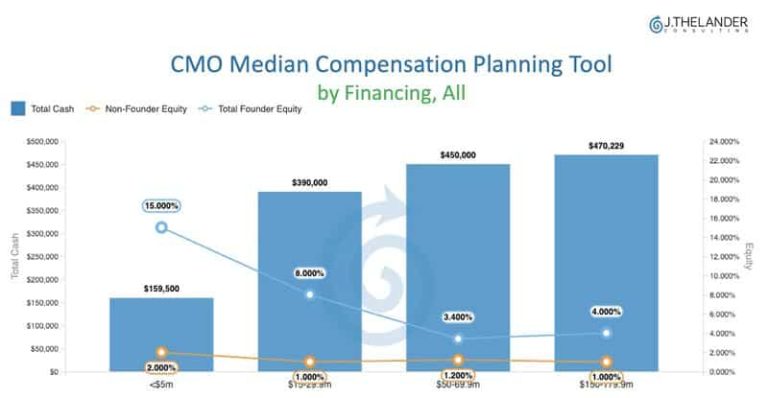
CMO Compensation at Private Companies: What It Takes to Land a Top Chief Medical Officer

CMO compensation at private companies is climbing as the role becomes one of the most competitive executive searches in life science. What’s a trending role for private life science companies right now? CMOs. Last week, we hosted a Lunch & Learn webinar (video below) with Cissy Young, PhD (楊 詩華), Managing Director True Search, and she shared why CMOs have become one of the hottest executive searches for private companies. “Financing is starting to come back, but the investors are very disciplined and they expect that the entrepreneurs are going to be disciplined.” If you’re going to spend the money

Read More »

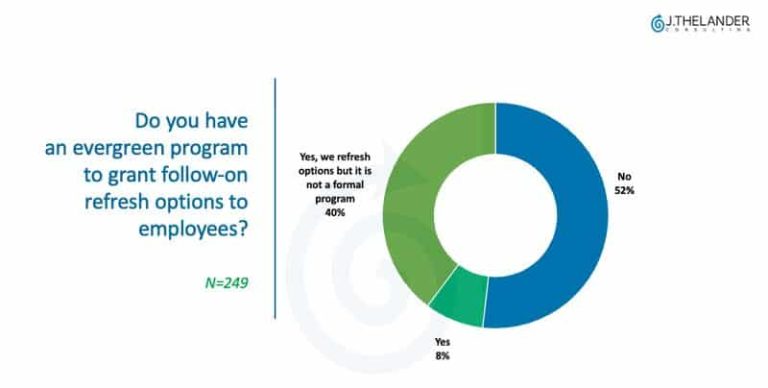
Equity Refresh Grants: When and How Often to Refresh Options

Equity is one of the most powerful compensation levers available to privately held companies AKA startups. We get asked weekly: How do equity refreshes work? In this week’s PC data drop, we’re breaking down what equity refresh grants are, when companies actually use them, and how to make them sustainable and strategic. All data is pulled from the Thelander Platform, via a Private Company Subscription. Equity refresh grants are follow-on equity awards for existing employees whose original grants are fully vested. They’re designed to keep key employees incentivized and aligned as the company grows. Here’s what you need to know:
Read More »

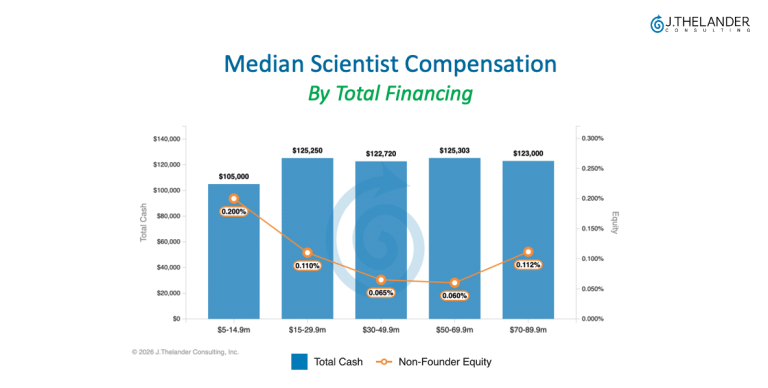
Scientist Compensation at Private Companies: How Cash and Equity Shift by Funding Stage
Scientist compensation at private companies doesn’t just rise with each funding round—the balance between cash and equity can flip as companies grow. As private companies raise more capital, the mix shifts: cash is more available and equity is more of a commodity. Using real-time data from the Thelander Comp Planning Tool, here’s how scientist total cash and non-founder equity move across financing bands. The Thelander platform provides real‑time compensation data on 300+ roles—from the C‑suite to entry‑level employees. To see how your current compensation compares to market, participate in the no-charge Thelander Private Company Compensation Survey today. You’ll unlock data for all
Read More »

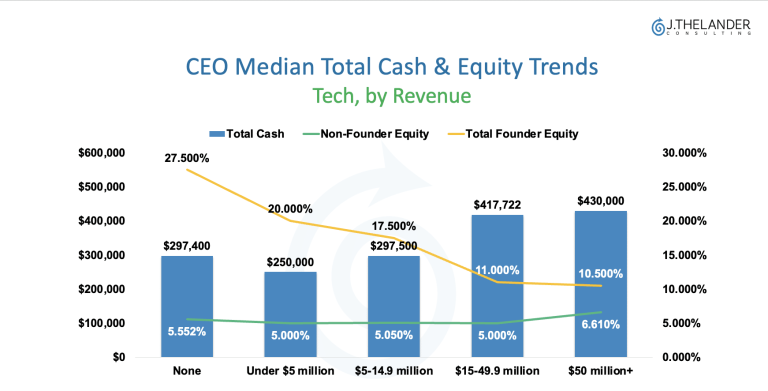
How Private Tech CEO Compensation Changes by Revenue

In this week’s PC data drop, we’re using data from the Thelander Platform looking at how median total cash, founder and non-founder equity compensation for CEOs of private tech companies shifts based on revenue. Generally speaking, the more revenue a company generates, the higher the CEOs median total cash compensation. As far as total founder equity goes, the typical dilution still occurs. Total Cash Rises With Revenue Founder Equity Dilutes as Companies Scale The equity story runs in the opposite direction. Non-Founder Equity Holds Steady What This Means for Compensation Planning Revenue is a meaningful benchmark for CEO compensation, but

Read More »

How Startup Executive Compensation Has Changed Since 2021

Using the Thelander YoY private company dataset, we looked to see which private company executives have seen the biggest movement in total cash since 2021. For startups with $50–$109.9M in total financing: In other words, CSOs have quietly seen some of the strongest total cash growth in this funding band—especially at the top end of the market. Curious to see how your current comp compares to real-time market data? Fill out the Thelander Private Company Compensation Survey today to find out ➡️ survey.jthelander.com

Read More »

Committing Capital For Your Carry

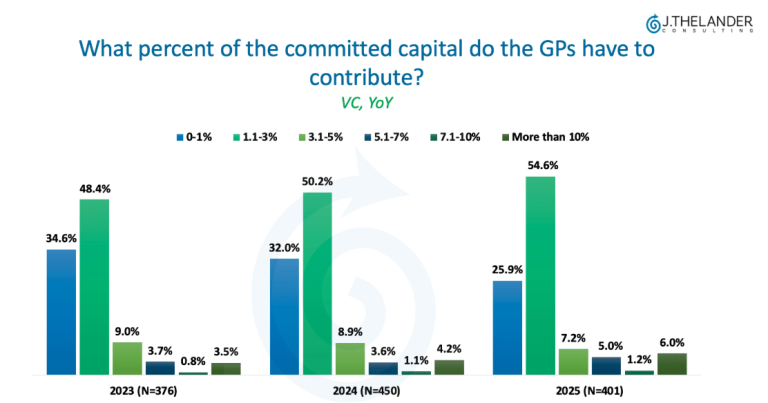
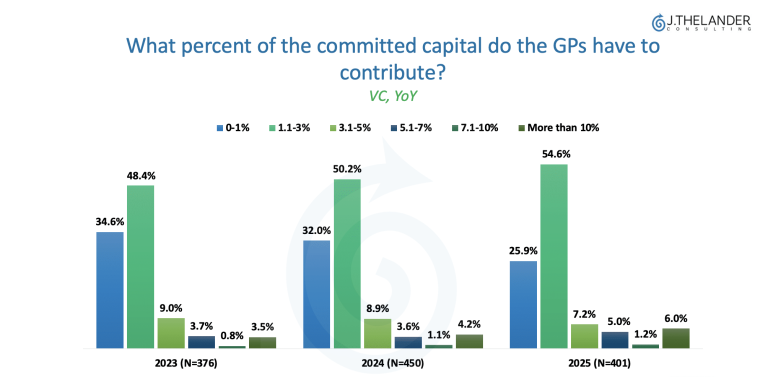
Committing capital for your carried interest is one of the most important – and often least talked about – parts of a carry package. When investment professionals write a personal check into the fund, they are putting skin in the game. That capital committed is tied directly to the amount of carried interest they receive, which is the upside when (and if) things go well. It ties the general partners (GPs) to the performance of the fund. Committing capital also aligns the interest of the GPs with the LPs, ensuring LPs that fund managers take on some of the risk

Read More »

Compensation Infrastructure for Startups: How Pay Plans Evolve as You Raise Capital

Building compensation infrastructure for startups is one of the most overlooked foundations of a growing company—but what does putting it in place really mean? It means building a clear job architecture and a structured salary framework. It also means moving away from ad-hoc decisions—whether driven by what an individual candidate asks for or by setting pay position by position—because those one-off choices tend to create problems down the road. It’s never too early to put this infrastructure in place. The sooner you do, the stronger your foundation will be. That way, you and your team can spend less time wondering

Read More »

What Startups Need to Know Re: Secondary Markets & Compensation

Thelander recently published the results from the Private Company Year-End Merit Increase, Option Pool & Bonus Report (available through a subscription to the Thelander Platform) – which featured new data on secondary markets given their prominence in today’s global private capital market. Here’s what startups need to know re: secondary markets and compensation. The results? 92% of private companies surveyed haven’t engaged in any secondary market transactions. Out of the 8% who have engaged in these transactions: And do the companies assist employees in financing a liquidity solution? Short answer, NO. As companies stay private for longer and “secondaries have gained acceptance as a critical liquidity

Read More »

What do CFOs at private companies make?

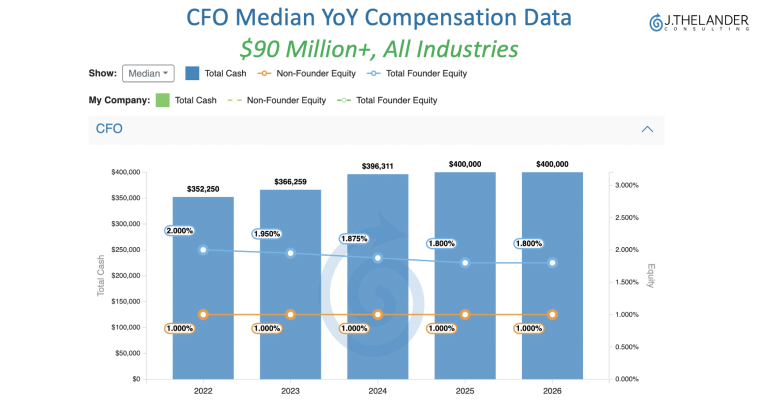
CFOs are invaluable at private companies (AKA startups) —often seen as the #2 alongside the CEO. At later‑stage private companies, the CFO isn’t just running finance; they’re co‑piloting the business and owning the path to liquidity (which is opening back up). So, what are these key players making? Using YoY data from the Thelander platform (available through a subscription or survey participation), median CFO total cash has risen from $352K in 2022 to $400K in 2025–26 for companies that have raised $90M+. If you’re a CFO or private company exec planning key 2026 hires, you can access real‑time compensation data for every

Read More »

Startup Compensation Trends: Five Straight Years of Total Cash Growth

Startup compensation trends continued their upward climb in 2025. This data drop analyzes total cash compensation trends across four key positions – CEOs, CSOs, Engineering Managers and Operation Managers – at startups that have raised between $50 and $109.9 million in total financing. Thelander data shows that total cash increased in 2025 for all four positions at both the median and 75th percentile. It continues the overall trend of increasing total cash since 2021.  Key Findings for YoY Growth (2024 to 2025):  At the median, Operations Managers saw the highest percentage of growth from 2024 to 2025 – 16% – outpacing higher-level positions which

Read More »

Investment Firm Compensation: Salary Increases for 2026

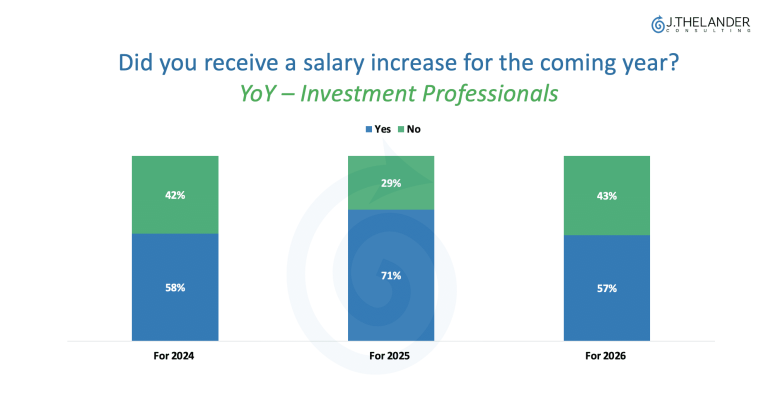
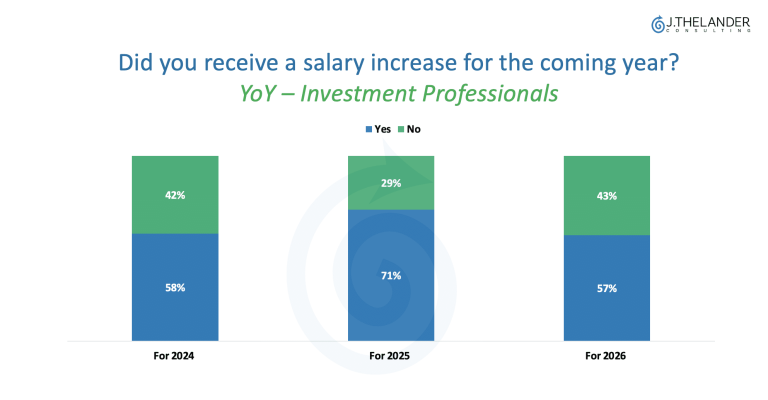
Welcome back to the Thelander Compensation Digest. As we wrap up 2025, here is a sneak peek at the results from our Salary Increase & Bonus Survey with PitchBook. Noteworthy is the cost of living increase as a factor for salary increases, which ties directly to market conditions. Find out more below!  The percentage of investment professionals who received a salary increase for 2026 has gone down since last year, but is on par with for 2024. Let’s dig in deeper – out of the six levels of investment professionals – who exactly received a salary increase going into the

Read More »

Investment Firm Salary Increases for 2026

Welcome back to the Thelander Compensation Digest. As we wrap up 2025, here is a sneak peek at the results from our Salary Increase & Bonus Survey with PitchBook. Noteworthy is the cost of living increase as a factor for salary increases, which ties directly to market conditions. Find out more below!  The percentage of investment professionals who received a salary increase for 2026 has gone down since last year, but is on par with for 2024. Let’s dig in deeper – out of the six levels of investment professionals – who exactly received a salary increase going into the

Read More »

Private Company Compensation by Gender: What the Data Shows for Executives and Staff

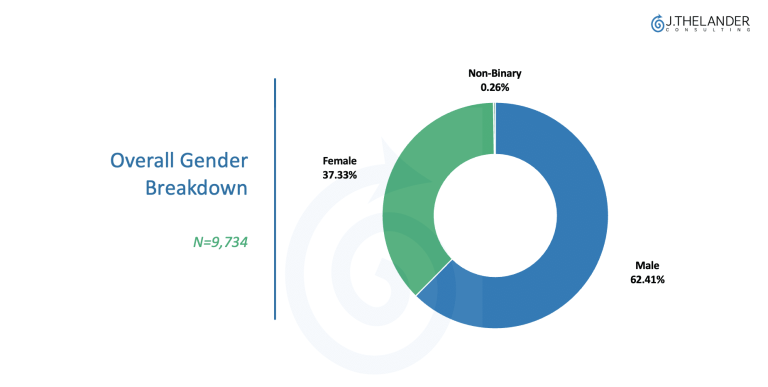
This month, we are digging into gender compensation data for executives and staff-level employees. According to the PitchBook – NVCA Q3 Venture Monitor Report, “80% of first-time financings go to all-male teams.” Thelander has been tracking gender compensation dat for the last 10 years. So, how does this impact compensation? The composition of the 9,734 total employees whose gender was indicated in our 2025 Private Company Compensation Survey was: There is more to the narrative. How does the gender breakdown look by level of seniority – Executives (Chiefs and VPs) compared to Staff-Level Employees (below the VP level)? Key Takeaways: There

Read More »

The State of Gender Compensation in VC

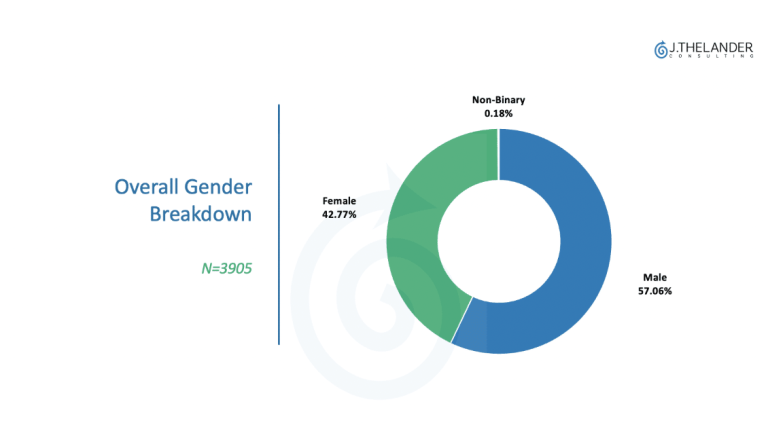
This month, we are digging into gender compensation data among partners and non-partners at venture capital firms. The compensation of the 3,905 total employees whose gender was indicated in our 2025 Thelander-PitchBook Investment Firm Compensation Survey was:  So, what’s the breakdown in venture at firms with less than $1 billion in total AUM? Male partners dominate the category, representing 76.7% compared to 23.1% for female partners.  For non-partners, men make up 58.5% of the category, while women are closer to parity. What does real-time comp data by gender look like for Managing General Partners and Director / Principals? Let’s start with

Read More »

Are Bonuses A Part of Your Total Compensation Program?

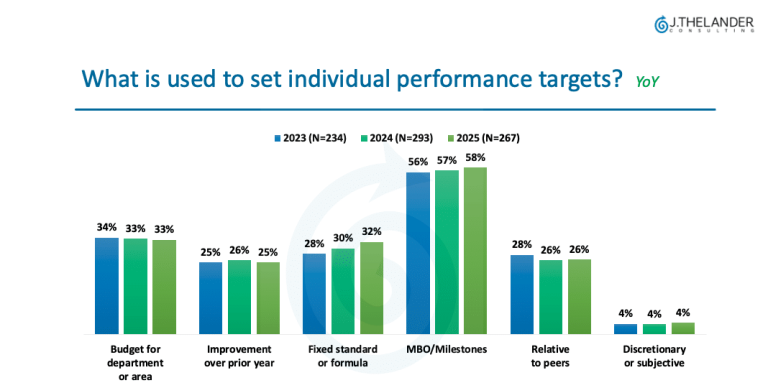
This month, we are digging into bonuses. For investment firms, bonuses can come in a couple of forms: According to the PitchBook – NVCA Q3 Venture Monitor Report, “GPs are exploring ways to generate distributions. The use of secondaries continues to grow, and new ways to use continuation-style vehicles are starting to enter the market. Now, almost four years past the 2021 highs, the liquidity crunch is really beginning to be felt.”  In the analysis below, we’ll look at the factors used to set individual performance targets in the short term and the prevalence of medium term equity or program distribution

Read More »
Private company bonus program — bonus as a percentage of base salary by seniority

Are Bonuses A Part of Your Total Compensation Program?

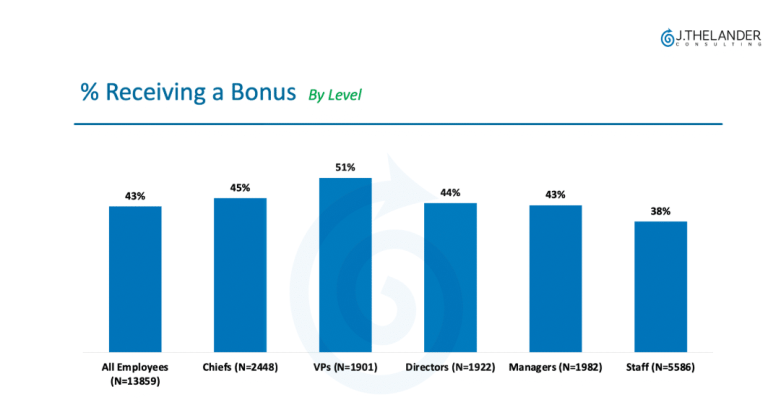
This month, we are digging into annual bonuses – who receives them, what percentage of the base salary they are and what is used to set individual performance targets. Bonuses can be an effective short-term incentive to reward performance in addition to the annual salary. What’s the most effective way to use bonuses? It depends on the type of bonus. There are different versions that include: annual, sign-on, retention, equity, or performance (spot) bonuses. For the purpose of this digest, we are going to focus on annual bonuses to understand how companies are using them. According to the PitchBook – NVCA Q3 Venture Monitor Report,

Read More »

Key Takeaways From the CVC Compensation Panel Webinar

We’re happy to share the recording of our October CVC Compensation Panel Webinar, featuring panelists from Cooley and TDK Ventures. This interactive session explored current CVC compensation trends and valuable insights on how firms are navigating the evolving market. You can watch the full webinar below. Key Takeaways Included: The Professionalization of CVC: There is a growing formality of CVC compensation and role design.Rise of Business Development Roles: Corporate Venture Business Development (CVBD) roles have grown in popularity to optimize the parent company skillset and talent inside the portfolio companies.Structure Drives Compensation: Compensation in CVC Units is heavily influenced by both the structure and

Read More »